By
December 20, 1965, the 16 little taxis were completed and the governor
issued permits for them to provide public transportation in Mazatlán.
Don Miguel Ramírez Urquijo, known by his friends as
El Chícharo (the Pea), only finished the eighth grade growing up in Mazatlán, but he had a quick and inquisitive mind and an entrepreneurial spirit.
As is the case with many men like Don Miguel, he had a variety of
business endeavors including selling bread, motorcycles, and pianos. He
even worked as a reporter for a period of time. But he always had his
eye on the next adventure.
When he was in his early 40s he passed by an open garage and saw an
old unused gasoline powered Cushman golf cart. He thought to himself,
“What a great way to get people around town.” Only a little modification
would be needed. He approached the town’s banks, only to be denied
financing for his crazy scheme by the smart bankers.
Undaunted, he travelled to Lincoln, Nebraska, the home of Cushman,
and talked the company into financing eight of the gasoline golf carts.
He brought them back to Mazatlán and rented a place on Constitución and
had his friend, Don Miguel Valadez Lejarza, make the necessary
modifications.
When his prototype was ready, as luck would have it, the Governor of
the State of Sinaloa, Leopoldo Sanchez Celis, was in town. Early one
morning El Chícharo drove his three-wheeled taxi downtown and parked it
in front of the hotel in which the governor was staying.
When the governor exited the hotel and saw the little taxi, he was
taken by the cleverness of the motorized tricycle, and struck up a
conversation with El Chícharo. El Chícharo did his best “sales job” and
before the governor left he told El Chícharo that he would help him
build sixteen of them and get the permits to drive them as taxis on the
streets of Mazatlán.
His location on Constitución got busy building the new taxis. His
Constitución location, which now houses the Municipal Arts Center,
served as the workshop for El Chícharo for ten years. The next time you
walk past this location (the first door on your right as you walk east
on Constitución past Carnaval) you will see a plaque commemorating this
fact.
By December 20, 1965, the 16 little taxis were completed and the
governor issued permits for them to provide public transportation in
Mazatlán. El Chícharo lined them up on the main street and drove his
little parade through town with him playing the accordion in the first
cart.
By the end of the following year El Chícharo had another 16 tricycles
and the public had accepted them as a quick and fun mode of
transportation. Although the public liked the newly created option for
getting around town, the drivers of city buses and taxis did not. El
Chícharo was cutting into their profits.
The open air transportation during the cooler months did cause one to
bundle up a little, as the fresh and strong ocean breezes swept through
the vehicle. The taxi drivers would tell prospective passenger that
they would “catch their death of cold” riding in one of those things.
Before long word had spread, thanks to the jealous taxi drivers and bus
drivers, that people were catching pneumonia riding in them. Although no
one ever met a passenger who had suffered the illness due to a ride in
the little tricycle, the name “pulmonia,” which is the Spanish word for
pneumonia, caught on. Before long El Chícharo’s little taxi had a name, a
pulmonia.
By the end of the 1960s there were well over a hundred pulmonias
plying the streets of Mazatlán. The drivers of the pulmonias had by this
time formed a union and decided they wanted a bigger piece of the pie.
The union approached the governor and asked him to issue permits to
them, so they could also have pulmonias on the streets. They argued that
free enterprise demanded it. El Chícharo should not have a lock on the
business.
Their request fell on deaf ears, or at least ones that were hard of
hearing. So the union decided to get the governor’s attention and on
April 4, 1975, the union struck El Chícharo. With a significant portion
of the city’s public transportation out of business, on May 28
th the state recalled all permits issued to pulmonias and began issuing temporary ones.
Operation and control of the pulmonias was granted to the union. The
story goes that the union’s operation of the business was so bad that
within a short time there were only 24 pulmonias serving the public.
In an attempt to revitalize the business major changes were made in
the early ‘80s. Since the three-wheel vehicle was really unsafe for city
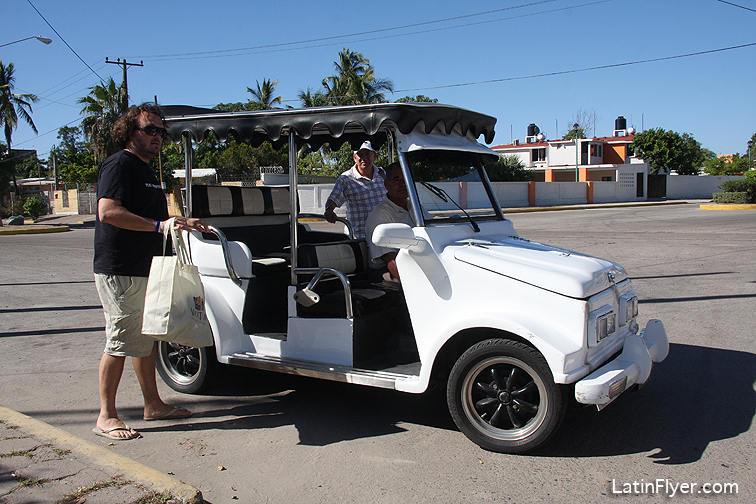
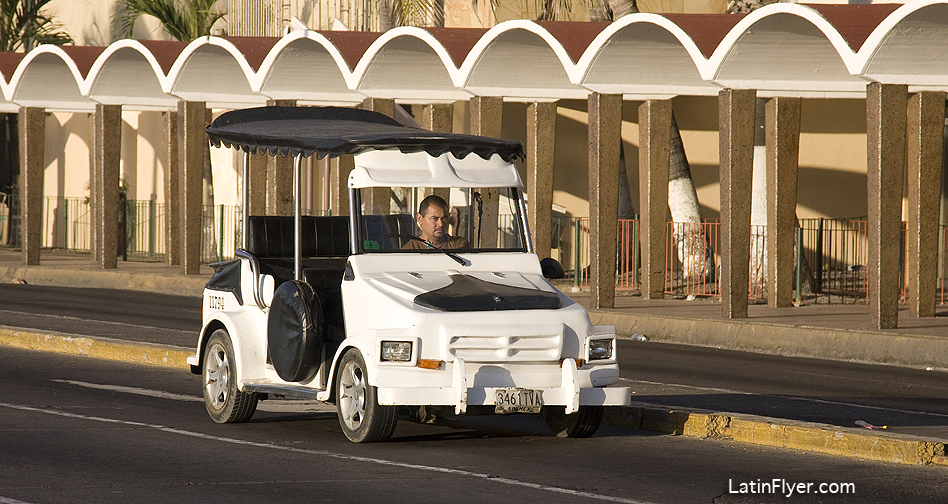
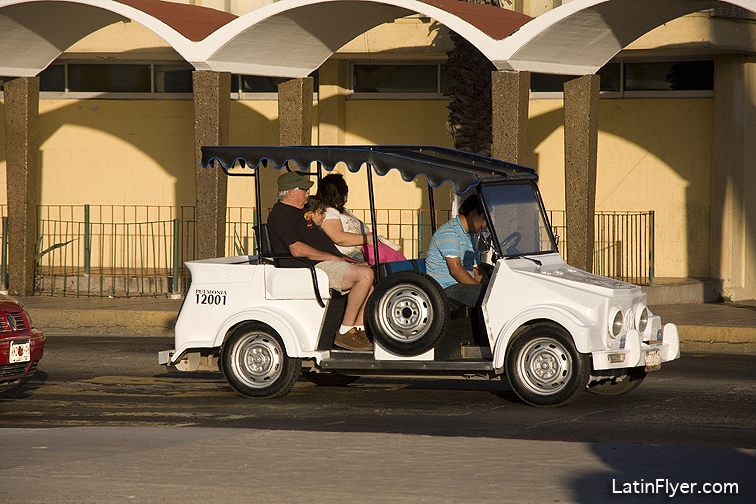
streets, it was decided to go to the current four wheel version. Also
the motor from a Volkswagen Beetle was substituted for the Cushman
motor. The availability of Volkswagen engines and parts substantially
cut the cost of both production and maintenance.
The pulmonia made a comeback and the design and name “pulmonia” was
registered with the federal patent office (The Mexican Institute of
Industrial Property). The union attempted to introduce the pulmonia into
other resort towns, such as Acapulco and Puerto Vallarta. However, the
local transportation unions never let the idea get off the ground. In
fact, one story says when the Mazatlán union took a pulmonia to another
town to show it, the local union set it afire.
And so, the pulmonia is another thing unique to “The Place of the
Deer.” The importance of El Chícharo’s pulmonias to Mazatlán was
memorialized in 2001 when a monument to the famous taxi was unveiled on
the Malecón across from the Aqua Marina hotel.
Today there are well over 350 pulmonias providing open-air
transportation to locals and tourists alike in Mazatlán. I must admit,
however, that sometimes during the months of January and February I am
more likely to catch a ride with a taxi. Not that I’m afraid I’ll catch
my death of cold riding in a pulmonia; it’s just a little too breezy.
But come March, like most people, I’ll be on the corner waiving down that white pulmonia.