Showing posts with label water. Show all posts

Thursday, August 14, 2014

What's Up With Mexico Utilities - Water, Toilets and Phone?

gomexico.about.com

By Kathleen Crislip
Question: What's Up With Mexico Utilities - Water, Toilets and Phone?
Answer: Yes, you can drink the water in Mexico. Carefully.

About Drinking the Water in Mexico

Drinking the water from the tap in Mexico is asking for digestive trouble unless you're going to be there for more than six months and your innards can get used to the local bugs. Even then, you may be ingesting parasites and raw sewage that can cause the mega travelers' trots.
  • Hotel room tap water
    • Sink water - even the cheapest Mexico hotel will supply bottled water in your room if the tap water is not potable (shouldn't be drunk). If you don't see bottled water in your Mexico hotel room, look for aplaque or sign proclaiming potable tap water; even with that disclaimer, you may prefer bottled water but you can be assured brushing your teeth is safe.
    • Shower water - if you can't drink the sink water (see above paragaph), don't let the shower water into your mouth. A partial mouthful of water in Mexico is enough to make you sick. Nothing in the water is going to hurt your external body during a shower.
Tip: remember to buy extra bottled water for your hotel room at night if you're drinking booze -- don't be double sick the next day from dehydration *and* guzzling the tap water.

About the Toilet in Mexico

If there is a wastepaper basket next to a toilet in Mexico, it means you are to deposit your used toilet paper in the wastepaper basket. The wastebasket's placement may mean that a septic system is in use which can't handle loads of toilet paper without expensive maintenance. It's tough not to automatically put toilet paper in the toilet in Mexico -- remembering that you could accidentally wreak havoc helps.

How to Make a Phone Call in Mexico

The long distance code in Mexico is 01. If calling the United States, first dial 001. To make other international calls, dial 00, and then the country and state and / or city (area) codes.
You can buy phone cards good for making calls in Mexico for 30, 50 and 100 pesos (about $3-5-10 USD).
    Emergency Mexico phone numbers
    • Police - 060
    • Fire department and ambulance - 080
    • Highway emergencies - 078
    • Tourist security - (55) 5250-0123 (it's meant to be used)
Call (55) 5658-1111 in Mexico for Mexico information (like 411). Use country code 52 if calling Mexico from another country.

Women's Bathroom Tips in Mexico

  • Don't flush tampons; put them in the same wastebasket used for toilet paper.
  • Don't count on finding machines dispensing tampons or pads in public bathrooms, including those in hotels or restaurants.

Tuesday, August 12, 2014

Can I drink the water in Mexico?

gomexico.about.com
By Suzanne Barbezat

Question: Can I drink the water in Mexico?
Many first-time travelers to Mexico have heard that they shouldn't drink the water. But what to do when you get thirsty? Not to worry: there's plenty of drinking water available everywhere in Mexico!
Answer:
As a rule you should not drink tap water in Mexico. The water is purified at the source but the distribution system may allow the water to be contaminated en route to the tap. Most Mexicans find the idea of drinking tap water somewhat repulsive: they buy water in five gallon jugs called"garrafones" which are delivered to their homes (and recycled). Do as Mexicans do, and stick to purified water.
Most hotels provide bottled water, or large jugs of purified water for you to refill your bottle. Many resorts take this worry away from their guests by having their water purified on-site; if this is the case, there's usually a notice by the tap that the water is potable ("agua potable").
Bottled water is affordable and readily available wherever you travel in Mexico. Order it in stores or restaurants by asking for "agua pura"
Ice is generally made from purified water; in hotels and restaurants that cater to tourists you shouldn't encounter any issues with the ice or water. Purchasing drinks from market stands and food stalls may be more risky. Ice that is in the form of a cylinder with a hole in the center is purchased from a purified ice factory and is safe.
As a long-time resident I now brush my teeth with tap water but I'm always careful not to swallow it. As a tourist you're better off using bottled water to brush your teeth, and try to remember to keep your mouth shut when you shower.

Thursday, May 8, 2014

Mexico Travel Tips

coastalliving.com

Mexico Travel Tips
Michael Hanson
Click to Enlarge

Passports: New federal regulations require all U.S. citizens to have passports for air travel to and from Mexico. Cruise passengers and travelers crossing by land will also need passports beginning January 31, 2008. The new regulations have prompted a passport rush. Apply now, and avoid the disappointment and expense of a canceled trip.
Traveling by Car: Mexico strictly regulates visitors entering the country by car. Before driving across the border, you must have the vehicle's state registration certificate certifying legal ownership or the leasing contract. If the vehicle is leased or rented, it must be in the name of the driver. If the vehicle belongs to a company, proper documentation is necessary to show you work for the company.
Once across the border, avoid driving at night. Roaming livestock can appear at any time. Travel tip: The country is crisscrossed by toll roads, and it's worth the expense to use them for the convenience and safer driving conditions.
Finally, U.S. automobile insurance is not valid in Mexico, so you'll have to purchase a separate policy covering the length of your stay. If you're in an accident, you will be taken into police custody until it can be determined who is liable.
Health: All visitors to Mexico should have routine vaccinations. And you'll want to stock up on basic medicines, such as antidiarrheals, insecticides, and sunscreen.
Review your health insurance policy before the trip to see if it covers you outside the United States.
Food and Water: As a rule of thumb, it's best to drink only bottled water, although hotels in resort areas often have water purification systems. Beware of ice cubes that may have been made with tap water.
Security: Like anywhere else, it makes sense to use hotel safes, avoid wearing obviously expensive jewelry or designer clothing, and carry only the cash or credit cards needed on each outing.
Water Safety: Remember common sense. You can still get hurt, even on vacation. Use caution when participating in activities such as parasailing, using personal watercraft, snorkeling, and diving.
Do not use pools or beaches that do not have lifeguards. Some Mexican beaches, including those in Cancun, have warning signs about undertow: Take them seriously.

Wednesday, April 30, 2014

Mexico Travel For Seniors – Tips For a Safe, Healthy, Worry-Free Vacation

Mexico Travel For Seniors - Tips For a Safe, Healthy, Worry-Free Vacation coleccionesmexicanas.org

We are often asked by seniors or by those wishing to travel with an older relative whether or not it is wise to choose Mexico as a destination. The answer is an enthusiastic Yes!… with a little fine print.
Mexico is a delightful place for seniors to travel. The people in general are gracious and happy to welcome foreign visitors. The culture is vibrant and festive, and there are very few places on earth where one can see as much history and natural beauty. In fact, Mexico remains today the number one expatriate retirement choice for citizens of both the US and Canada, in spite of the much publicized recent troubles with Swine Flu and drug trade related violence.
For most senior travelers, the biggest concern with whether or not they are going to get sick. Fortunately, with a little advance preparation and a few precautions on the road, you can enjoy all the country has to offer without missing a beat.
The first and most important preventative measure is to see your doctor before leaving home. Just do it. Your physician knows your history and will also be up to date on latest medical news. Follow his or her advice. Make sure you receive the proper inoculations and vaccinations. This precaution is fundamental.
Montezuma’s Revenge
After your visit to the doctor’s office, it’s time to deal with more mundane issues. First among these is the universal concern with Montezuma’s Revenge, aka the tourista, or “traveler’s diarrhea” which results from consuming tainted food or water. Though usually not serious, the tourista is extremely unpleasant, and takes at least twenty four hours to run its course, leaving its victims weak and gun-shy about experimenting with the local cuisine.
At the risk of sounding unsympathetic: anyone who comes down with the tourista in Mexico today is just not being careful. Just know the lay of the land. Mexico is not a third world country, but it is a country in development. Over the last twenty years, great strides have been made in improving hygiene, and this is especially true in the many tourist zones.
To avoid the tourista, follow these simple precautions:
- Give yourself a few days to allow your system to adjust. One of our favorite treats in Mexico is the delicious street food, but when you first arrive, stick to the restaurants that obviously cater to foreign guests.
- Be careful with unpeeled fruits and vegetables. Fortunately, it’s longer necessary to eliminate them from your diet while traveling in Mexico, and what a shame that would be! Throughout the country there is an abundance of wonderful produce served in ways that tempt the palate, serve up healthy doses of vitamins and other nutrients, and help keep your system hydrated. But it is important to check to make sure that all unpeeled produce has been sterilized by washing in disinfected water. If you are ever in doubt, never hesitate to ask. Don’t worry about offending your waiter…It’s worth it, believe me!
- Pack appropriate medicines. Pick up an anti-diarrheal at your local pharmacy and bring along a bottle of analgesic. A good multi-vitamin will ensure that you’re not missing essential nutrients while savoring an unfamiliar cuisine. If you forget to pack these items, don’t worry: there’s are pharmacies everywhere in Mexico and they are almost always first rate.
- Stay hydrated. This goes for everyone who travels to Mexico, regardless of age. It’s a hot place, and it’s very easy to dry out. Make sure you always have plenty of bottled water on hand at all times and take it easy with diuretic beverages such as alcohol, coffee, and cola.
Swine FluAgain, the best advice here is to talk to your doctor. Having said that, it is clear that the Swine Flu, while officially a pandemic, turns out to be no worse than the more common viruses that appear every year during flu season. The good news for senior travelers is that, statistically, we are less likely to catch the Swine Flu than those who are younger. As we age, our immune systems become more mature and develop a greater ability to resist infections such as the flu virus.
Other serious disease.
There are localized, sporadic outbreaks of more serious disease in Mexico, but they are rare and generally only occur in isolated areas. Your pre-departure inoculations should keep you safe, but if you’re still concerned, just stay on the beaten track. There is a great deal to see in Mexico in places that the government has carefully developed to welcome foreign visitors. Expeditions to more remote locations, jungle or heavily forested areas prone to mosquito infestations, for example, do carry additional risks. We would never categorically exclude traveling to these areas, they are some of the best places of all, but they do require extra preparation and care. If this kind of travel is on your itinerary, tell your doctor.
Mexico is for most extranjeros a largely undiscovered, romantic, fascinating world of adventure. It’s a country to fall in love with. With just a little foresight, you can be sure that your trip will be safe, healthy, and worry-free.
My name is John Lord. My wife Alma, a native of Puebla, Mexico, and I divide our time between the NY metro area and Mexico. Today, we specialize in cultural tourism, with a focus on the Yucatan. We also collect Mexican artesanias (hand crafts) and conduct cooking classes in Mexican regional cuisine.
We maintain a website dedicated to helping senior travelers enjoy the endless variety and delight of Mexico.

Monday, April 28, 2014

Tips for how to travel to Mexico with kids

simplebites.net

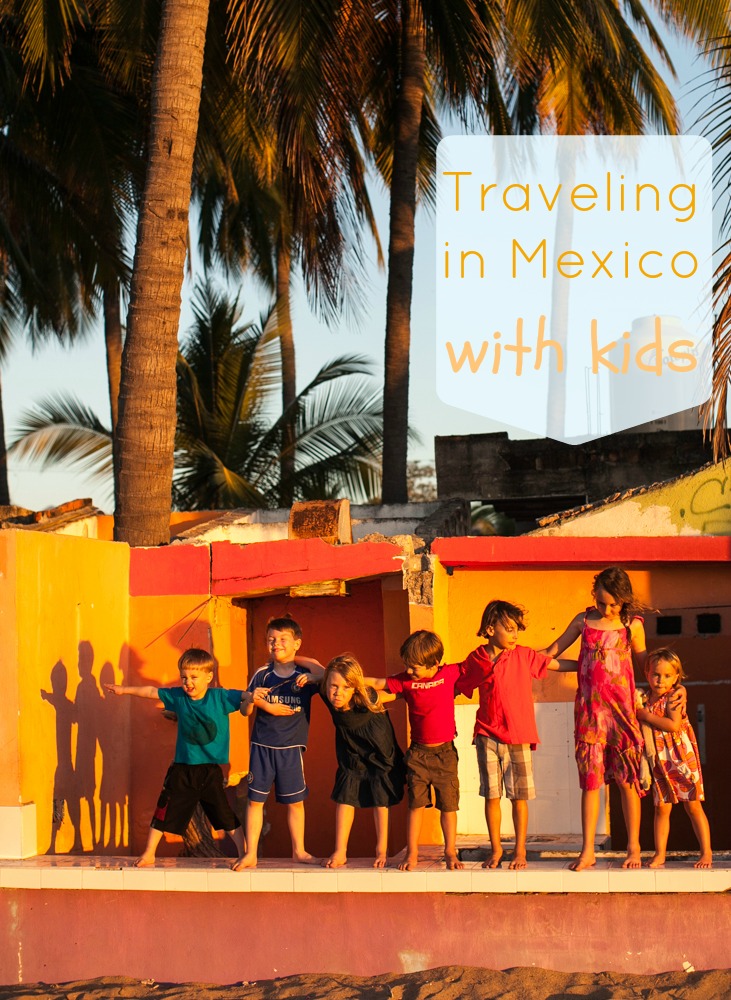
Traveling with kids in Mexico
Nearly 15 years ago, my older brother Josh and I embarked on a 3-month backpacking trip through South East Asia and Mediterranean Europe; we had plenty of adventures over those weeks. This month, traveling together for the first time since those Birkenstock-wearing, hitch-hiking days, we reunited in a developing country – but on this trip, we had our spouses and children along for the experience.
I have plenty of travel experience under my belt, which is why I noticed early on that this trip feltdifferent. For the first time, I was seeing a foreign country through the eyes of my children, and in a sense, anew.
Our little ones are at a perfect age for traveling. Noah is our avid reader, happy to spend an entire flight with his nose in a chapter book. Mateo is our happy-go-lucky free-spirit, happy to skip along holding my hand. And little Clara is still content in a Snugli and completely portable, as she sleeps anywhere cradled in-arms.
Traveling in Mexico with Kids
Although we’re not quite ready to embark on a round-the-world adventure like our friends Ryan & Stephanie with their four kids, we do hope to keep traveling with our three because we feel it is an important investment into their future. For one thing, it opens their young minds to sights, sounds, smells and experiences that can never be learned through schooling or a slew of Planet EarthDVD’s.
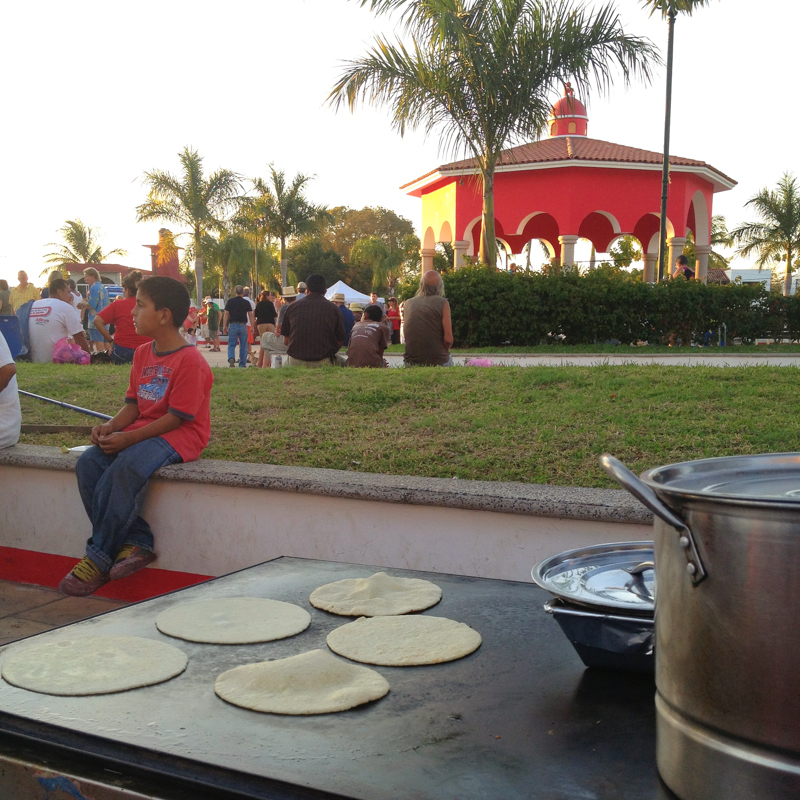
We Wimbushes aren’t really the type to book an all-inclusive vacation at a resort (although I understand the appeal) as we like to closely experience the culture of a foreign country and introduce it to our children. During this trip we bartered for handmade wares at the bustling city market, selected our daily avocados and bananas alongside the locals at the produce stand, and stood in line for goat tacos and cinnamon-sugar coated churros from the street carts.
Traveling with kids in Mexico
Our reunion in Mexico, together also with my two sisters and their families, was so utterly fantastic, that I couldn’t not share a mere snapshot of our time with you. I kept my big camera handy and jotted a few notes down here and there from my favorite experiences, like yesterday’s story of finding magic in a small tortilla factory.
Although I was on a nearly-full digital vacation, I found I missed writing, and every so often, a nugget of useful information would nestle itself in a mental file folder labeled “Mexico”.
Hopefully, there’s enough of those nuggets assembled here and in the posts to come to give you some takeaway and encourage you to travel with your kids.
Traveling in Mexico with Kids
Traveling with kids in Mexico is an adventure that requires bravery, planning, bottled water, band-aids, bunches and bunches of bananas, and tons of baby gear.
On our backpacking trip so long ago, I remember sawing off the handle of my hairbrush just to lighten the weight of the backpack on my 5’3″, 110lb frame. Now, we shlep a pack n’ play, a car seat, a portable feeding seat, and miscellaneous items such as water wings, stuffed monkeys, and math workbooks on top of everything else.
Before we leave, there is the rush to pack, empty the fridge, arrange for kitty care, and locate the travel documents, to say nothing of the midnight oil burned to schedule two weeks’ worth of posts on the blog. Then there is the abominably early taxi ride to the airport, the dash through the cold morning air with only a hoodie for warmth, the hours of waiting and security checkpoints, and the cramped quarters on the flight.
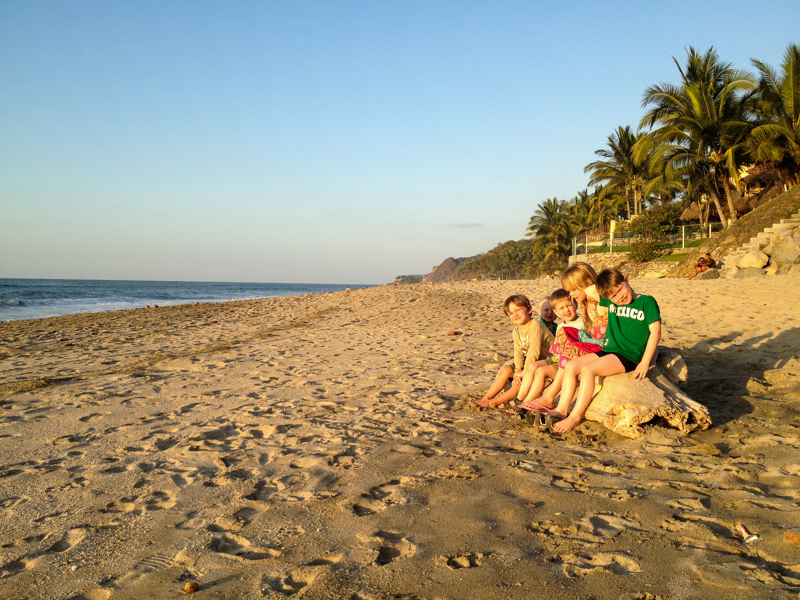
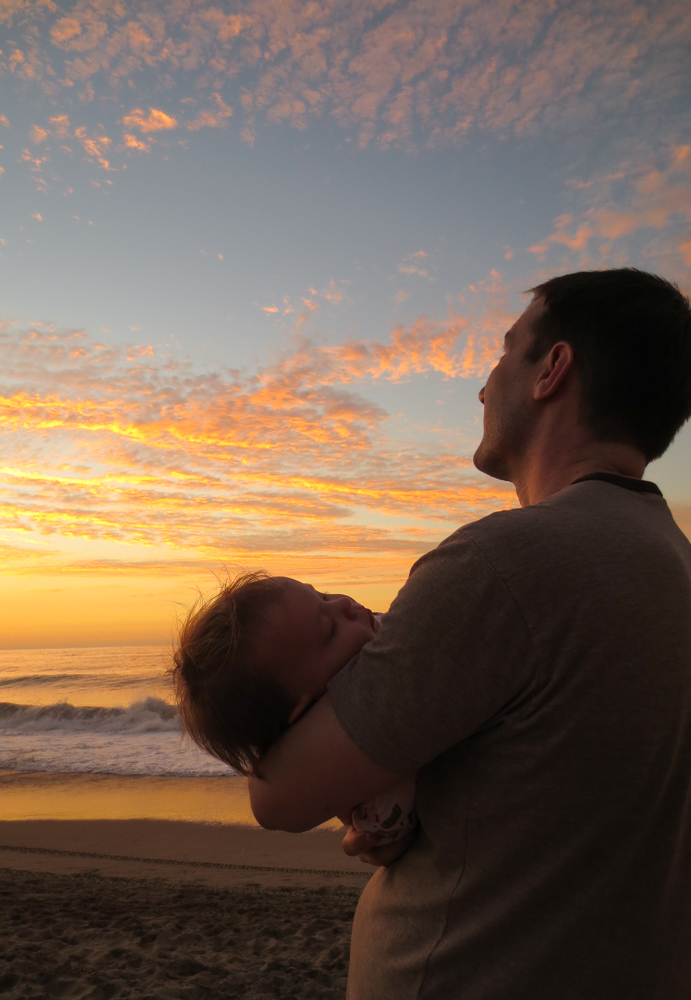
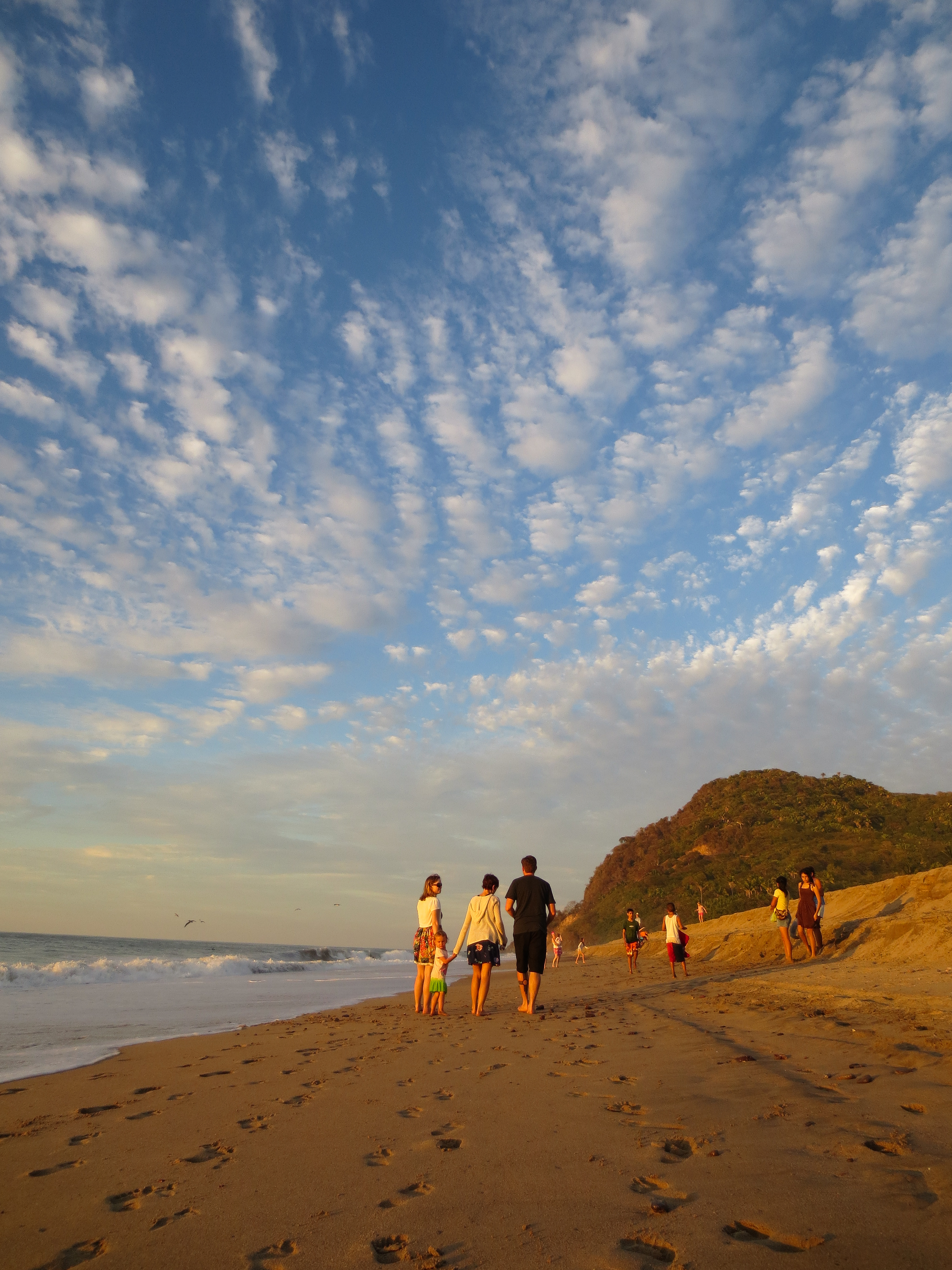
Finally, tired and smelly, hungry and groggy, we arrive, and all of the stressful travel pays off with the first kiss of the sea breeze and the golden hue of the sun setting on the sand. An adventure awaits.
sunset beach
I’ve decided to break my posts up into smaller sections featuring plenty of images from the trip. In this introductory post, I’ll cover my general takeaway from our time and basic tips for traveling with kids in Mexico.
After I’ll write about feeding the family, what we ate, and what our baby-led solids girl, Clara, enjoyed. Finally, I’ll share about our accommodations and the quaint, relatively undiscovered beach town where we stayed.

GETTING AROUND, OR HOW TO MOVE YOUR MANY, MANY BELONGINGS

Our round-trip taxi service came recommended by friends and we would in turn endorse Jose Ramos Taxi Services. Based out of Sayulita, they picked us up at the Puerto Vallerta airport and drove us to the Mega superstore (Carretera a Tepic Km 144) , where we shopped for half an hour for our grocery staples.
Then they delivered us to our villa in Lo de Marcos, about an hour away. A week later, they picked us up and brought us to Sayulita, and a week after that, brought us to the airport. It worked out to about $180USD for everything; cheaper and less hassle than renting a car.
Our driver, Daniel, spoke English, drove quite safely, and only talked on his cell phone while driving a few times! My kids all had seat belts, we enjoyed the AC, and iced bottled water from a cooler in the suburban.
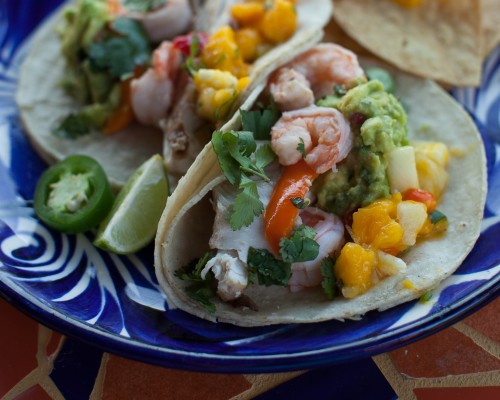
shrimp taco dinner

HEALTH CONCERNS, OR KEEPING YOUR TACOS DOWN

Contaminated food, drink, insect bites and sunburn are a few health concerns you may encounter in Mexico. That said, I think the country gets a bad rap, and wish more people would factor in a) climate change, b) jet lag, c) lack of sleep, d) dehydration, or e) alcohol into the equation before blaming some poor Mexican taco maker for their case of Montezuma’s revenge.
Still, a small container of non-drowsy Gravol’s Natural Source Ginger Tablets were one of the most important items that made it into my toiletries bag. Since I enjoy eating the authentic local fare when I travel, it’s normal that I experience some mild nausea and upset stomach. It took a few days to adjust to the (delicious) local foods – for both my siblings and I – and the Gravol helped to maintain a feeling of normalcy. (I’ll write more later on what we ate and precautions we took.)
Traveling with kids in Mexico (an in any developing or third-world country) does require a small leap of faith as far as their health is concerned. You want to have a well-stocked First-Aid kit, a bottle of water on hand at all times, and sanitizer or wet wipes to keep little hands clean.
We ran the gamut on our trip: mild fever, cough and cold, upset tummy,  sunburn, and one bee sting. All in all, though, I think we did pretty well. Honestly, I think the mild bug some of us experienced during our early days in Mexico came from something we picked up in transit (germs on airplanes? *Shudder*).
Outfits for Traveling with kids in Mexico

WHAT TO PACK OR KEEPING EVERYONE CLOTHED AND HAPPY FOR COSTAL MEXICO

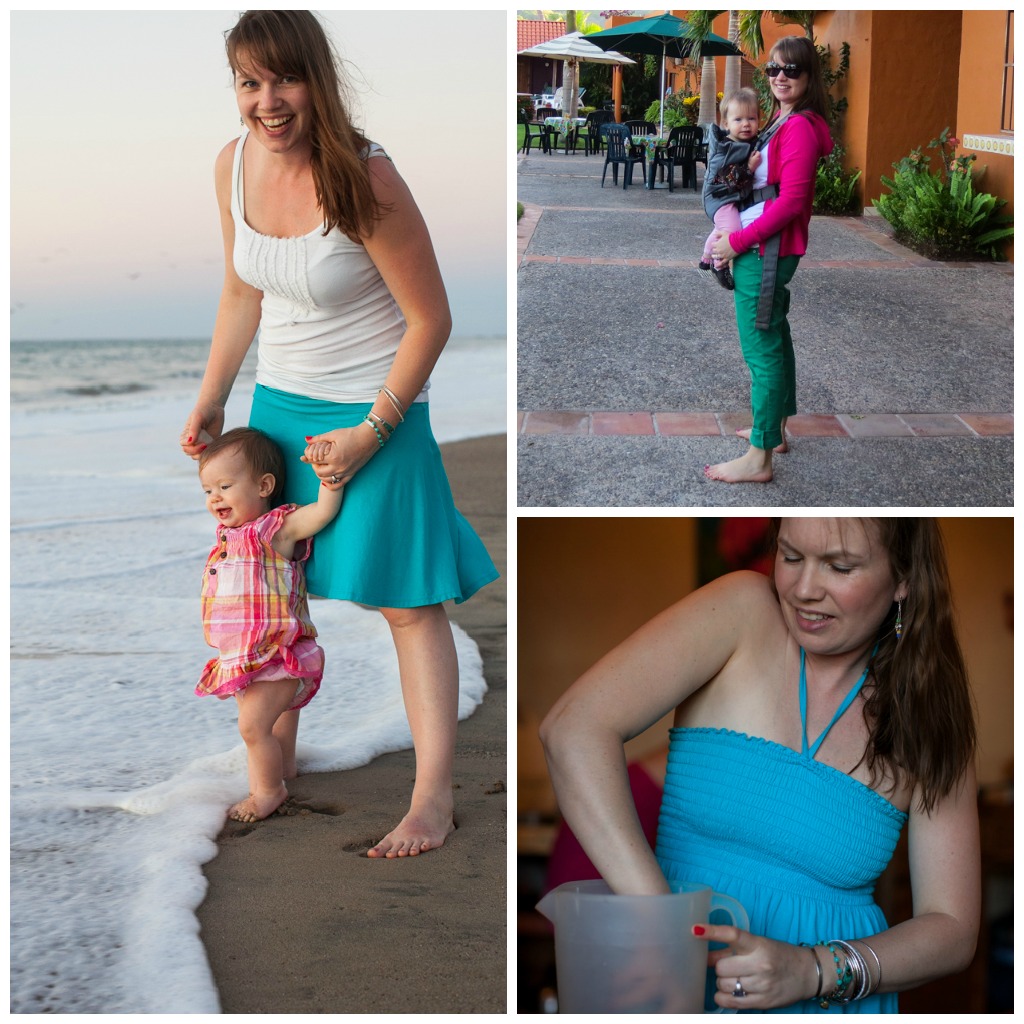
Comfortable, quick-dry shorts and tank tops for the parents are good, preferably colors that don’t show spit-up and food stains. Of course a sundress or two, bathing suit and sandals, and a hoodie are all helpful for the evenings when the temperature cools down and the wind whips off the the water. I wore long pants and a hoodie for the early morning walks and kept quite cozy.
Dressing the kids is a cinch, with nothing more required than you would need at home for a week in the summer. Croc’s and sturdy sandals were all the footwear our children needed; let’s face it, they were barefoot eighty percent of the time.
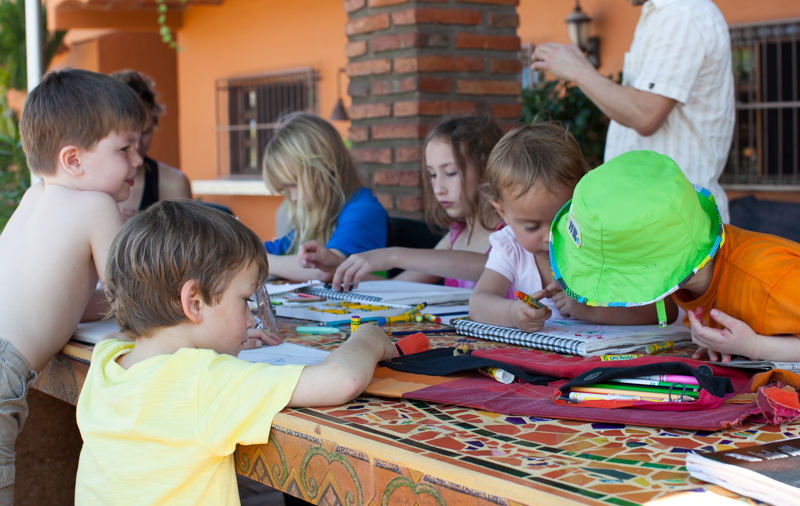
We made space for a large sketchbook and a case of pencil crayons for the children in our luggage and they got plenty of use. In the afternoons, when the sun was the hottest, we often had an art lesson with all of the nieces and nephews.
kid art
Surfers, sandcastles, market sights – there was always plenty of fuel for the imaginations of our little artists on this trip.
For Clara, we used a Snugli or an umbrella stroller for our frequent daily walks: Sungli for the beach, stroller for the street. We also checked a car seat and a pack n’ play into over-sized luggage (neither which required an extra fee from the airline) and made good use of both on the trip.
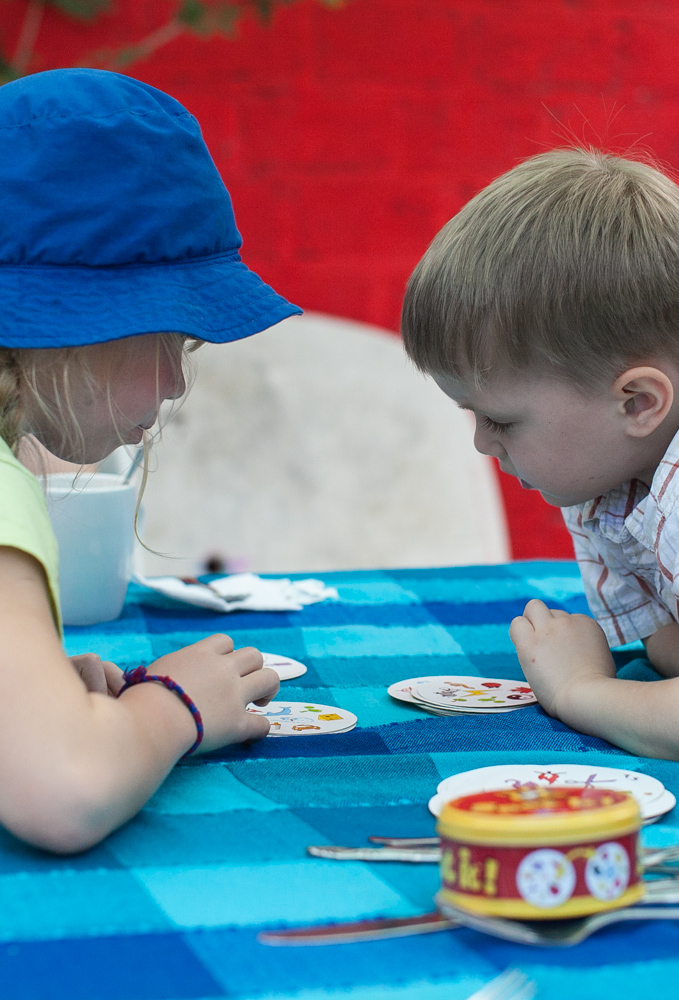
The children each brought a special furry friend, a comfort for both the airplane ride and the fortnight of sleeping in strange beds. We also packed a couple of small favorite games  Spot It and Piratatak - both of which got a tremendous amount of use from all the children. Nothing passes the time at a restaurant like a little friendly competition between cousins.
kid games

FINAL TAKEAWAY

Get out into the smaller towns. Bustling, hot cities are not much fun for children, or for parents who are constantly worried about a bus side-swiping their five-year old for that matter. In the villages, one can make friends with a gaggle of first-grade school girls or share two miles of beach with nothing but a mighty flock of pelicans.
Give responsibility in small measures. Children love to feel like they are helping, so give them the task of finding directions once in a while, or entrust them with a carry-on bag, even if it means they may walk away from it in North America’s busiest airport. Yes, we left our carry-on luggage with 2 laptops unattended for about half an hour. Oops.
Lift weights before you go. It is entirely possible that your littlest one may want to be held the entirefirst day upon arrival, just as an adjustment period. Strong arms also come in handy for lugging groceries and beach bags.
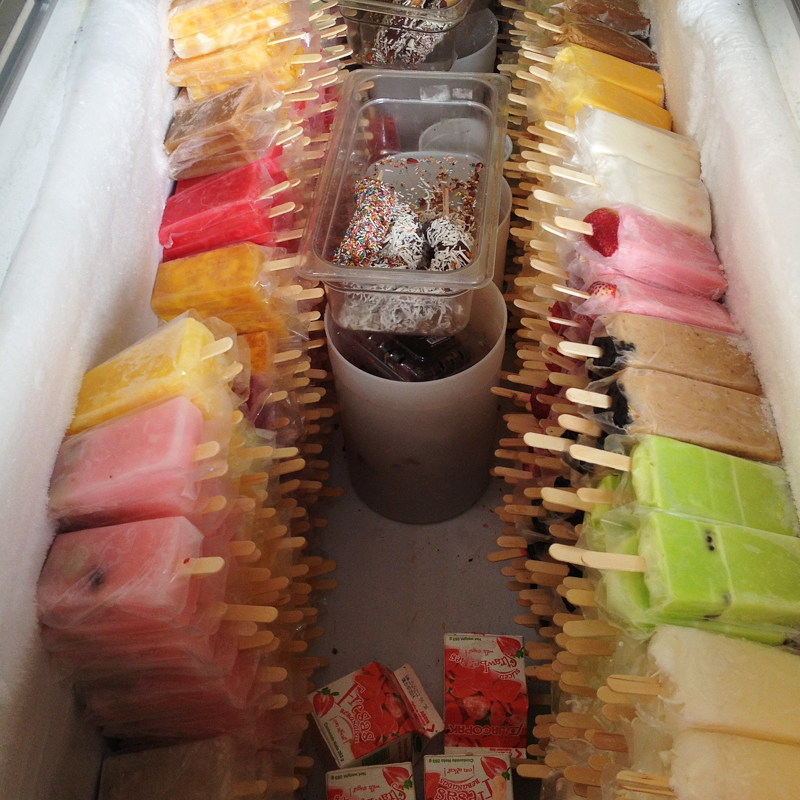
Heap grace on your children. Travel is wearisome for us all. It can also be totally boring, and they couldn’t care less about sights that may give us a thrill. Oh, and they get sick of having their photo taken. Put yourself in their dusty sandals at least once a day, and if you find yourself longing for ice cream, find the nearest paleta vendor and buy everyone a fruit pop.
Mexican paletas
Communicate with your spouse. Perhaps the most important tip of all. Remember you are a team: work like one, and all will go smoothly.
Oh, and try not to lose it with your husband in the Mexico City immigration line when he decides that the five family passports are better off in his back pocket than in your purse and then forgets to tell you. Yeah, that happened.

Tuesday, April 1, 2014

Health and Safety in Mazatlan

mazatlansource.com

GENERAL HEALTH: Most day-to-day Mazatlan health problems are easily preventable, and fall into four categories: Water, Food Preparation, Spices, and Alcohol.

WATER: The water treatment systems in Mazatlan produce water that meets most modern world standards for purity and cleanliness. However, those ratings are for water as it leaves the plant…the pipes in-between the plant and your house may be old and highly suspect. Everybody (gringos and Mexicans alike) drink bottled water, and restaurants universally serve purified water from the standard 5-gallon (18 liters) containers and serve ice delivered from an ice company that uses purified water as well. Bottled water is also available at every grocery store, from the largest to the tiniest, in ½, 1, and 1-1/2 liter bottles. If you stick to bottled water, you’ll never have a problem.

FOOD PREPARATION: Most everybody cleans their food with water treated with Microdyn, an anti-microb agent mixed with water (it purifies drinking water as well, so use tap water with Microdyn rather than bottled water). You can find Microdyn in nearly any grocery store in Mazatlan. Add 8 drops to each liter of water, and soak your fruits and vegetables in the mixture for 10 minutes. You only need to treat produce that is going to be eaten un-cooked whole or with the skin…for example treat celery and tomatoes, but there’s no need to treat melon. Produce with lots of ‘wrinkles’ is most important to treat…for example, lettuce and cabbage, cauliflower, broccoli, strawberries, etc.

Basic conditions of cleanliness should be observed before eating at street carts. Watch to see that the hands that handle the money are covered in plastic gloves or bags, or that the person handling the money is not handling food. We’re aware of many guidebooks that advise against eating from the food carts on the basis of health and sanitation reasons, but feel that their views are a tad over paranoid. All the carts are regularly inspected for sanitation, and carts serving poor quality food don’t stay in business long. There are a few things you might want to do if you’re concerned. Squeeze some lime (“limon”) on your tacos before eating them…every cart has limes, and the juice is a natural anti-bacterial, and adds a flavorful ‘zing’ to your food. Also, if your stomach tends to be sensitive, take some Pepto-Bismal before your meal.

SPICES: Mexicans LOVE chili…a visit to any supermarket will reveal an entire section of canned chilis and an antire section of fresh and dried chilis in the produce department. They’re used to it, but YOUR stomach is probably NOT. Go easy on the salsas, at least for starters. Ask for your food “no picante” (not spicy”) or with “salsa picante a lado” (spicy salsa on the side). Again, Pepto-Bismal is good protection for sensitive (or possibly-sensitive) stomachs.

ALCOHOL: In our opinion (and we can personally testify to this), excess consumption of alcohol is probably the number-one cause of “Montezuna’s Revenge”. When on vacation, people tend to ‘cut loose’ and imbibe in considerably larger quantities of tequila, beer, and other booze than their system is familiar with. If you’re only here for a week, well, we’re sure you can justify it when you get back to normal back home.

If you’re moving here, it can be all too easy to slip into a routine of daily happy hours, sunset parties, and other social gatherings which revolve around alcoholic beverages. Monitor yourself, and know that AA meetings and support are available in Mazatlan if you start to slide down the slippery path of alcoholism.

SAFETY: Is Mexico safe? Is Mazatlan safer than where I live now? The answer to the first question is “Yes, but it’s not perfect”. The answer to the second question is “Yes, probably much more so, but it’s not perfect”. Mexico is a VERY different country, MUCH more so than, say, the difference between the U.S. and Canada. Tourism is a huge industry for Mexico, the third largest generator of revenue in fact (behind oil and foreign remittances by Mexicans living abroad), so the country in general and the towns of Mazatlan in particular are very protective of tourists (even those ‘tourists’ who live here year-‘round). You will see army and police personnel with machine guns occasionally. This doesn’t mean there’s a gang of bandits about…it’s merely a sign that Mexico intends to protect a valuable asset – tourists.


Are there ‘banditos’ here? I’ve never seen any, except for the timeshare hustlers, but that’s not to say they don’t exist. Your chance of a first-hand experience with violent crime here are drastically less than in Canada, even more so than in the U.S. While this is true in most of Mexico, it is particularly valid here in Mazatlan where tourism is virtually the ONLY industry, and therefore the focal point of the government’s protective stance.

Taking normal precautions, just like you would at home, will keep you safe: Avoid walking unlighted streets at night, keep your money safe, don’t flaunt expensive jewelry in unfamiliar surroundings. Your safety is not likely to be compromised by a criminal, but more often by other hazards which you might not even have imagined...read on:

TRAFFIC: Mexicans are aggressive drivers. This, however, seems to be the norm as opposed to ‘the States’ or Canada where you have a mix of overly-aggressive and overly-cautious drivers and everything in between, which is the base cause of accidents. As it is, since EVERYBODY drives aggressively here, it all seems to flow very smoothly (though not quietly…Mexicans love to communicate with their car horns). Indeed, most gringos are amazed at the considerable LACK of road accidents here, compared with their daily experiences back home.

Driving at night outside of the city is widely recognized as something to avoid if at all possible. This is not due to gangs of banditos setting up roadblocks to rape and kill, but because stray cows and other farm animals tend to be attracted to a nice warm stretch of asphalt as a place on which to sleep (an even more serious ‘roadblock’). Of course there’s also always the question of how sober the other guy coming at you might be.

The real danger from traffic is when you are a pedestrian. Here, the pedestrian does NOT have the right-of-way. It’s important to recognize this immediately, and wait for large breaks in traffic before crossing a street, and to check BEHIND YOU before crossing for vehicles which intend to turn the corner across your path.

SIDEWALKS: How dangerous can a sidewalk be? The answer lies in the wonderful lack of lawyers and the legal difficulty in filing liability lawsuits. Amazingly, in Mexico, a person is actually LIABLE for their OWN MISTAKES! So forget about suing the restaurant that served you the steaming hot coffee you ordered and then spilled on yourself, causing 3rd-degree burns. No lawyer in the city, state, or country will take your case.

What’s this all have to do with sidewalks? Well, in Mazatlan, they are not always level, even, or flat. Sometimes they’ve got little holes in them where the cover for the water access has been removed, or they’ve simply settled and cracked. In older parts of town, one section of sidewalk was built first, but later land-owners on either side decided to make their sidewalks a little higher, or lower. Sometimes the sidewalks suddenly become ramps or driveways. Curbs can be a few inches high or as high as your knee, maybe with steps and maybe without.

We know that especially when you first arrive, your tendency is to be looking up and around, not at your feet. Try to do BOTH: WATCH YOUR STEP!