Showing posts with label testimonials. Show all posts

Saturday, January 3, 2015

Stranded motorists: police to the rescue

Mexico police officer Mexico's police: good apples and bad.


Stories about Mexico’s police aren’t all bad.

A Canadian couple traveling through Mexico in their RV had a mechanical problem near Ciudad Obregón yesterday: a spring broke. But they weren’t stuck for long.

Murray Ruehlen of Campbell River, B.C., said the first help arrived in the form of a young man, who was followed a couple of minutes later by a police vehicle.

One officer got on his cell phone to call a mechanic. Ten minutes later and the mechanic arrives, but he’s not just any mechanic: he works for the police department.
 
Ruehlen had a spare spring, tools and a jack on hand so the mechanic and the young man had the broken spring replaced within an hour. Meanwhile, the police remained on the scene with emergency lights flashing for protection.

The Canadian travelers tipped the two men who did the work and gave the two police officers chocolates and candy for their children — they wouldn’t accept cash.

“Where else but in Mexico!” wrote Ruehlen in a post describing the experience on the page of the Facebook group, On the Road in Mexico.

Mexico News Daily

 
- See more at: http://mexiconewsdaily.com/news/stranded-motorists-police-rescue/#sthash.R8HJEo23.dpuf

Tuesday, December 23, 2014

Mazatlán Fifth in National Popularity for Beach Vacation

With respect to tourism, the numbers increased 5.15 percent over last year.
With the arrival of more than 1.6 million tourists and an annual median hotel occupancy rate of 54.l3 percent, Mazatlán will close out 2014 ranking fifth of the 19 “sun and beach” tourist destinations in México.
According to preliminary statistics issued by Datatur up to November 23, 2014, Mazatlán registered an increase of approximately 3.77 points in hotel room occupation compared to 2013. The port was one of 15 beach destinations showing a positive number this year.
With respect to tourism, the numbers increased 5.15 percent over last year.
The Top Five “sun and beach” destinations in Mexico this year were:
Cancún: 5.56 million tourists
Acapulco: 4.08 million tourists
Riviera Maya: 3.32 million tourists
Veracruz: 2.48 million tourists
Mazatlán: 1.64 million tourists
(from Noroeste)

Friday, November 28, 2014

Millions of Americans and Canadians drive down the roads of Mexico every year. Are they Safe?

 theyucatantimes.com

Bill and Dot Bell have traveled extensively throughout Mexico for over two decades.  Their website www.ontheroadin.com is the most comprehensive Road guide on travel in México on the internet. This what they have to say regarding safe traveling down the Mexican Highways.
The hot sun, the rolling waves crashing against palmed lined beaches and the friendly people of Mexico can lull you into a sense of tranquility and that elusive dream world of “paradise found.”  But is Mexico truly safe for the average American and Canadian traveler? Specifically is it safe for those visitors who travel outside of the tourist resorts by car, bus, and RV; the traveler who wants to experience the “real Mexico.”
What about the stories of kidnappings, roadside hijackings, crooked cops and the ever infamous bandidos?   After 20 years of exploring all 31 states in Mexico via bus, car, train and RV, we would be lying if we said that there wasn’t anything to be concerned about.  After all, in Mexico the average yearly wage of the Mexican would not even make the first down payment not to mention the worth of the cameras, computers, stereos and other equipment that is contained in the average mobile house.  When you drive across the border, no matter how modest your motor home is, it is ostentatious in the Mexican environment and it stands out, sending a signal to all who see it, that you are wealthy.
Much like Canada and the United States, 99 per cent of the Mexican population will look and perhaps be envious of the apparent wealth, but would never dream of robbing you or causing any harm. In our experience, the average Mexican is much more a Good Samaritan and will go out of their way to assist you than is the case north of the border. It is that one per cent or less of the population, which is a concern and requires you to use your common sense and take the necessary precautions. Staying alert is essential to keeping your journey happy and safe.
Merida Downtown
Merida Downtown
Crime happens in all three countries, but there are cultural and economic differences. Many victims are those who are on holiday and are lulled into a false sense of security.  They forget to put away valuables outside of their rigs at night; something most of us would never dream of doing back home. RVers and campers boon dock by themselves on a deserted beach or they don’t plan their trips wisely and fail to reach their destination well before night fall.  Some tourists not knowing the value of the foreign currency will foolishly open their wallets, fat with pesos, to a clerk and ask how much do they owe them?  Others end a night of drinking Tequila at a disco and decide they want to walk back to their hotel even though they are not familiar with the neighborhood.
*
As a former chair and member of the RCMP Liaison committee back in our home town of North Vancouver, we shudder every time we see a tourist leave a camera or a purse on the restaurant table unattended as they head for the washroom. What are they thinking? Vigilance when one travels anywhere in the world is necessary, even when camping in State and Provincial Parks close to home.
Lets be clear about one thing, there are varying degrees of precaution one should take while traveling Mexico.  The U S State Department’s warnings about travel to Mexican border towns such Juarez, Tijuana and Matamoras should be taken seriously and we certainly recommend that you drive through these border towns early in morning and get through as quickly as possible.   Extra precautions have to be taken in larger metropolitan areas such Mexico City where urban crime is as great if not greater than traveling to New York in the early 1990’s.  Pickpockets here are as numerous as those who ply the Paris Metro and the taxis you take in any large city should only be those recommended by the hotel where you stay.
Mexico on the Road In Website
This is not the case in tourist destinations and small and mid sized communities throughout Mexico where crime rates are similar to those in the same size communities back home. One notable and perplexing difference between cultures is the acceptance in Mexico that police can be bribed, called Mordida, or “the little bite.”  After almost two decades of road travel in Mexico and talking and writing to drivers we find that this practice is getting less and less common. Both State and Federal governments of Mexico are making earnest attempts to stop it but the practice still exists.
If you are pulled over by the police for a real or sometimes imaginary traffic violation; speeding, making an illegal turn or driving through a red, you will likely be faced with two options. You will be faced with your drivers license taken away by the police, having your vehicle impounded and waiting at least 24 hours before being able to pay the fine at the “Ministerio Público or Transito.”  The other option, although abhorrent in our gringo eyes, is to have the policeman do the favor of paying the fine for you. Likely the price of this invisible ticket will be less than the official police station price. While “the little bite” is repugnant to us, it has a long tradition in Mexico. We personally do not agree with this practice but it does occur and many “Norte Americanos” happily pay the officer because it is cheap and expedient and therefore perpetuate the practice.
In the small communities and in the colonial heart land of Mexico, we have rarely felt the need to add up restaurant bills or double check a charge at a grocery store.  Many times waiters and or cashiers have chased after us insisting that they had given the wrong change…too little.   This has not been our experience in major tourist areas where over charging almost seems the norm rather than exception.  When asking a Mexican amigo that spent his earlier days as a waiter in Cancun why this was occurring, his response was simple. “If you can afford to not check your bill, then you can obviously afford to pay the waiter a little extra.”  But that’s stealing we insisted. “No. Stealing would be not correcting the bill when it is pointed out be incorrect,” said our friend. This is an unacceptable rationale for theft most would say, but a little sympathy must go out to the waiter who is serving a table of patrons that individually spends more in one sitting than he or she earns in a month. Check your bills and if you don’t understand a charge ask.
Beach House in Yucatan (Photo: yucatan.quebarato)
Kidnappings in some parts of Mexico do occur and perhaps to us is the most disturbing aspect of the safety question. To date the vast majority of kidnapping has occurred in major centers such as Mexico City and the bulk of those cases have been inflicted on rich Mexicans. As parents of three children, two of whom live us, and who works and lives in Mexico City, this by far creates the most fear. “What if they should change targets?  What if they go after the “gringo community?” Mexico has made every effort to catch these criminals and dispatched special squads to interview victims and those threatened with kidnapping. It is difficult however to apprehend the perpetrators when they use pay or cell phones.
There lies the rub of traveling in today’s world. 9/1l, the London Tube bombings and the disappearance of the American high school girl in Aruba, all prove one thing. There is some inherent danger when traveling abroad and some that you cannot avoid. An event of such enormity is unlikely and should not deter you from travel and adventure. The key to the majority of petty crimes or crimes without violence is to be prepared, never let your guard down and apply basic common sense to your actions.

Lessen the possibility of crime by always taking note of your surroundings and acting appropriately. Don’t flaunt your wealth by wearing a gold bracelet while jogging on a beach or openly carry an expensive digital camera while sauntering through an impoverished village or neighborhood. When visiting or staying in a foreign country, register with your consulate. They will inform you by email if there is a major problem such as a hurricane or other threat that would possibly impede your stay. Read the State Departments warnings on travel to that country and take steps to minimize any potential peril. Report any crime to your consulate so that other travelers can be forewarned.
If you drive, start early and plan your trip daily to give yourself ample time to reach your destination before sunset allowing for extra time in case you have a mishap such as breakdown or flat tire. You shouldn’t drive at night.  We say this not so much because of crime on the road, but because the cattle, horses, pigs and goats free range in the countryside and can wander aimlessly on the roadside, even on the toll highways.
*
Mexico is a fabulous country, filled with superb contrasts, palmed lined beaches, colonial cities, ancient Mayan and Aztec pre-Hispanic treasures. Experiencing it can be a highlight in your life. Traveling carefully can save your life.
Here’s list of some things you should do to avoid being a victim of crime while traveling in Mexico
  • After a evening at a restaurant, bar or disco always take a cab back to your room or RV park
  • Never walk on a beach late at night
  • If you are at a disco or party, never be enticed to leave the establishment for fresh air or a romantic walk with someone you have just met
  • If there are drugs present, leave immediately – even if it is in a reputable establishment
  • Check with your consulate or go on line to read State Department warnings on criminal activities in the area that you are visiting
  • Never give out personal information to strangers (room #, address, phone numbers, etc)
  • Do your homework and know the value of the currency you are using
  • Only carry the money that is needed for the day (use the hotel safety deposit box to keep your bank and credit cards)
  • Never wear valuable jewelry or carry expensive cameras openly
  • Travel in pairs or groups whenever possible
  • If you are camping or RVing, never boondock on deserted beaches or back country unless you are familiar with the locals in the area or there our other RV’s  parked there as well
  • When confronted by a thief with a weapon, never put up a struggle. Your life is far more valuable than anything they could take.
  • Never leave anything of value outside of your RV or tent, overnight or when visiting a neighbor, restaurant or even a facility onsite.
  • If you find yourself in any situation where you feel uncomfortable for whatever reasons, trust your judgment and leave.
We think this list could be applied to anywhere we have traveled in the world. Mexico is no different. Your responsibility as a traveler is to travel wisely. Ensure you pack your common sense along with your bathing suit and sunscreen.

Thursday, November 20, 2014

Cruise Ship Passengers Praise El Centro

Passengers from the cruise ship Crown Princess that was docked in Mazatlán yesterday said that El Centro was their favorite spot. The passengers said the area was calm and the people were very friendly.
Of the 3,800 passengers it was estimated that 30 percent of those that disembarked chose to spend their time in El Centro.
They favorably commented on Plaza Machado, the Cathedral, and strolling down the Malecón.
Rafael Rivera López, a well-known tour operator, encouraged local vendors not to increase their prices when the tourists request products or services. He said that tactic just hurts the city in the long run.
Rivera López also said that security for the passengers should not be reduced; noting that Acapulco is now experiencing what Mazatlán experienced a few years back and that could have a ripple effect on the city.
(from El Debate)

Tuesday, November 11, 2014

Mexico Offers Something for Everyone

Mexico Offers Something for Everyone
PHOTO: Puerto Vallarta combines art, culture and food with sun and fun.

travelpulse.com
BY: CLAUDETTE COVEY

Mexico offers an astounding number of vacation options, with each region boasting a unique set of tourist attractions. Visitors can take in the pristine beaches of Cancun and Riviera Maya, visit ancient Maya ruins or travel to Acapulco, a city known for its legendary nightlife and La Quebrada cliff divers who leap from heights of 148 feet into the water.
Travelers can also choose to visit Huatulco’s nine gorgeous bays, with 36 beaches, and inlets and coves, or take in the myriad festivities of Carnival in Mazatlan. There’s also Puerto Vallarta, which offers exquisite dining and a unique blend of city and beach attractions.
Following is a snapshot of 10 Mexican destinations, which feature a wide-ranging appeal for an eclectic array of travelers.
1. Acapulco
In 2012 the state of Guerrero launched the Sun Triangle initiative, which promotes the state’s three top tourism destinations: Acapulco, Ixtapa-Zihuatanejo and Taxco.
For its part, Acapulco is undergoing a major tourism renaissance, thanks to citywide urban renewal and private development investment. For starters, the corridor from the airport into Acapulco has been transformed into a polished, landscaped boulevard.
Comprising part of the Playa Revolcadero and a swath of the adjacent Puerto Marques, Diamante is one of Latin America’s most ambitious lifestyle projects and serves as the heart of modern Acapulco. This area sports Acapulco’s finest golf courses (four), luxury condos and resorts, and La Isla Shopping Village. It also includes Mexico’s premier performing arts venue, the Forum Mundo Imperial, which features live performances throughout the year.
In tandem with the Diamante development, infrastructure improvements are underway, including a new Acabus system that will run from the Traditional Zone to the Diamante area. A Macrotunel project is creating a roadway through the mountain that separates Acapulco Bay from the Diamante area.
A new advisory council has been charged with protecting, rehabilitating and revitalizing Traditional Acapulco. The council has proposed initiatives ranging from a marine museum, road and sidewalk improvements and new hotel developments. The cruise ship terminal has already been remodeled.
2. Cancun
Cancun is probably best known for its 14 miles of immaculate beaches. The destination, however, features a rich Mayan history and plenty of activities both in and out of the water. Although Cancun’s history is ancient, the city itself is relatively new, dating back to 1967 when the Mexican government began developing the area as a tourism destination.
PHOTO: Cancun is best known for its 14 miles of beaches.
Here, travelers can snorkel in an underwater museum, swim with whale sharks and climb Coba’s Nohoch Muul Pyramid, the tallest in the Yucatan Peninsula. Coba is not the only Maya site in the mix. Travelers can also take excursions to Tulum or Chichen Itza as well. They can also visit picturesque Isla Mujeres and Cozumel, which are short ferry rides away.
There are plenty of beach-based activities as well: swimming, snorkeling, diving, sailing, fishing, water-skiing and parasailing. Travelers will also find plenty of top-notch golf courses and excellent shopping options.
Cancun is home to hundreds of varieties of protected flora and fauna. The wildlife refuge Isla Contoy harbors 114 species of protected birds and marine and land animal life. Travelers can also visit the Cancun Underwater museum, which features 500 life-size sculptures in the waters surrounding Cancun and Isla Mujeres. At the eco-parks Xcaret, Xel-há, Xplora, and Selvática, they can spend the day swimming through underwater caves or with dolphins.
3. Huatulco
Set in the state of Oaxaca at the edge of the Sierra Madre Mountains, Huatulco stretches along 20 miles of Mexico’s Pacific coastline between the Coyula and Copalita rivers.
Fonatur, the government tourism development agency, targeted the area for resort development in 1980. By 1988 the Bahias de Huatulco (Bays of Huatulco National Park) was designated as a protected reserve. Today, it is home to a wide array of hotels, restaurants, nightclubs, discos and golf courses.
The centerpiece of Huatulco’s appeal is the area’s nine bays, comprising 36 beaches, and inlets and coves. A three-hour boat ride, which can be arranged by local operators, will introduce travelers to the area’s beaches, and flora and fauna.
Huatulco’s placid bays are a perfect setting for an array of watersports, including swimming, snorkeling, jetskiing, windsurfing, sailing, diving and snorkeling. Tangolunda and Santa Cruz boast the best watersports facilities of the nine bays.
Travelers may want to consider taking an excursion to the verdant hillside town of Puerto Escondido, located about 68 miles up the coast from Huatulco. The destination has also earned a reputation for world-class surfing due to the formidable waves found at Zicatela Beach.
4. Ixtapa/Zihuatanejo
Ixtapa and Zihuatanejo are often visited in the same trip but offer travelers decidedly different experiences.
Ixtapa boasts high-rise hotels, all-inclusive resorts, air-conditioned restaurants and upscale shopping options. For its part, Zihuatanejo is more low key, with meandering streets replete with galleries and folk art shops, boutique hotels and palapa-style restaurants.
Conceived and developed by Fonatur, Ixtapa was born in the 1970s, and features an ecology-minded master plan that requires half the land in the development be kept as ecological reserve. The destination has matured nicely, with the town appointed in a tropical canopy of verdant tropical foliage. A complex of handicraft stalls, boutiques, designer stores, bars, coffee shops and restaurants run parallel to the Hotel Zone. Taxis are rarely needed to access attractions.
For its part, Zihuatanejo has evolved from a quiet fishing village to a vacation destination. It comprises three side-by-side coves linked by a road that rises over hills and cliffs into the Pacific. The stone-paved streets of
Zihuatanejo’s Paseo del Pescador take visitors past the panga fishing fleet, public art displays and small boutiques and cafés and bars.
Active vacationers can stay busy with watersports, golf, deep sea fishing and boat excursions. The destination also offers eco-adventures and educational tours.
Taxco is an authentic 16th-century Spanish mining town, featuring a hillside maze of narrow cobblestoned streets and red-roofed residences. At every turn, travelers will find stores that sell its locally produced silver jewelry.
The town’ showpiece is the Santa Prisca church, set against the dramatic Sierra Madre Mountains. The surrounding area includes nature parks, waterfalls, caves 16th-century haciendas and rural communities. Travelers here will find a range of eco-adventure activities.
5. Los Cabos
Los Cabos comprises three distinct areas: San José del Cabo, Cabo San Lucas and the 20-mile Corridor, or highway, connecting them.
PHOTO: Unspoiled beaches are a highlight of the Los Cabos Corridor.
On Sept. 14, Hurricane Odile made landfall at the destination, causing serious devastation. Rebuilding efforts, however, have been swift and effective, with many hotels already opened again, along with local businesses, attractions and golf courses. Air service has also been restored to the region.
San Jose del Cabo retains the look and ambiance of a traditional Mexican town, with cobblestone streets, intimate restaurants and boutiques. Cabo San Lucas, meanwhile, features a livelier vibe, with a diverse array of bars and the Luxury Avenue Mall centered around the marina.
Many of the destination’s luxury resorts and championship golf courses are located along the Corridor, which is also home to some of the area’s best beaches for watersports.
Los Cabos is also firmly entrenched as a golf destination, offering courses designed by such notables as Norman and Weiskopf, which can be found along the 25-mile Corridor between Cabo San Lucas and San José del Cabo. Big game fishing is another major attraction here, and Cabo San Lucas’ marina has 380 slips accommodating vessels up to 200 feet. Other activities include scuba diving, snorkeling, kayaking quiet-riding ATVs, cycling and horseback riding.
6. Manzanillo
Mazatlan serves as a popular weekend getaway for Guadalajara residents and also attracts its fare share of Americans and Canadians. In 1996 its downtown area was restored. More recent renovations include a harbor-side esplanade and a “dancing fountain” robotic water show.
Just a few miles up the coastline is the destination’s resort zone. Bahia Manzanillo to the south carries most of the development, while Bahia San Diego, farther up the coast, is largely undeveloped.
Known as the Sailfish Capital of the World, Manzanillo’s waters are filled with marlin and sailfish, as well as a variety of other marine life. Manzanillo hosts annual fishing tournaments that attract sports fisherman from around the globe. But fishing is not its only draw. Visitors to Cuyutlán beach can snorkel, scuba dive and surf. The destination also has two world-class golf courses.
For scenic touring outside Manzanillo, travelers can head north along the Costalegre and Highway 200, into the neighboring state of Jalisco. The 153-mile highway runs between Manzanillo and Puerto Vallarta, and takes in the sites of fruit plantations, deserted beaches and tranquil fishing villages.
Nature enthusiasts can take advantage of Costalegre’s cliff-top trails, which shelter beautiful, isolated beaches. Stringent gentrification campaigns have kept 150 miles of shoreline between Manzanillo, Colima and Puerto Vallarta virtually untouched. The area also offers hiking, horseback riding, tennis, golf and watersports options.
7. Mazatlan
This colonial city on the beach offers guests equal amounts of cultural and outdoor tourism options. The city is the only beach resort in Mexico with a downtown filled with beautifully restored 19th-century buildings. No trip to Mazatlan would be complete without a walk along the 11-mile Malecon, which extends from the beachfront resort district to Old Mazatlan.
The Zona Dorada (Golden Zone) was created in the 1960s and is the site of many major hotels, shops, bars and restaurants, along with beautiful beaches. Old Mazatlan or the Centro Historico (Historic Center), is where life hearkens back to another time, as evidenced in the area’s markets, cafés, churches, plazas and traditional neighborhoods. A third area, Nuevo Mazatlan, is where many newer major resorts are found, as well a marina and two new golf courses.
The destination is renowned as one of Mexico’s best fishing venues, with its waters featuring 800 species of fish. Travelers can also explore its jungle-lined canals, kayak and surf.
Mazatlan also plays host to huge numbers of revelers who come to the destination for Carnival in last week of February or the beginning of March.
8. Puerto Vallarta
Last year, the Mexico Tourism Board announced a $10 million advertising campaign to jointly promote Puerto Vallarta and Riviera Nayarit. The two destinations, however, are also still promoted individually as well.
Nestled on the shores of the Bay of Banderas, Puerto Vallarta is divided by the Cuale River into north and south.
On the southern end is the charming Romantic Zone and the Playa los Muertos, which draws legions of beach enthusiasts. Further south are seaside villages of Boca de Tomatlan and Mismaloya, where “The Night of the Iguana” was filmed. North of the river is the Old Town with its Plaza de Armas (main square) and Los Arcos amphitheater, featuring daily performances.
The city’s venerable Malecon with is whimsical bronze sculptures runs from the Romantic Zone to the start of the Hotel Zone. Further north, travelers will find the Hotel Zone and marina, the site of many resorts and restaurants.
Virtually every imaginable watersport is available along Puerto Vallarta’s miles of shoreline, including whale watching, surfing, deep-sea fishing, kayaking, snorkeling, scuba diving and sailing.
On the weekends, the city’s main square and Malecon come alive with artists displaying their works, food stands and strolling tourists and locals. Puerto Vallarta also offers great shopping from local artists and craft fairs. In fact, the city boasts one of the most dynamic art scenes in Mexico.
9. Riviera Maya
The Riviera Maya comprises an 86-mile corridor, located in the northeast coast of the Yucatan Peninsula in the state of Quintana Roo. The destination starts in the village of Puerto Morelos, located about 22 miles south of Cancun, and extends south to the Sian Ka’an Biosphere through the town of Punta Allen.
It includes the resort towns of Playa del Carmen, Puerto Aventuras, Akumal and Tulum.
More than 2,000 years ago, the Maya built cities, which are still evidenced today in three archaeological sites: Cobá, Muyil and Tulum. Tulum is the most picturesque, as it’s the only Mayan city built seaside.
The Playa del Carmen region boasts excellent venues for zip-lining, scuba and snorkeling, fishing and ATV tours. Other highlights include exploring sinkholes (called cenotes); visiting the theme parks of Xplor, Hidden Worlds and Aventuras Mayas and Xcaret.
Golfers will find a range of championship golf courses in the Riviera Maya, many of which are carved out of jungle, mangroves and beaches and are available for year-round play.
10. Riviera Nayarit
Set between the Pacific Ocean and the Western Sierra Madre Mountains, Riviera Nayarit spans the Pacific coastline for nearly 200 miles, with its southern border just 10 minutes north of the Puerto Vallarta International Airport.
Areas include Sayulita, a popular beach village on the coast; Punta Mita, which boasts a portfolio of resorts of all types, as well as two Jack Nicklaus golf courses; San Blas, a quiet town known for it’s Old-World charm; Nuevo Vallarta, with its myriad all-inclusive resorts; and Litibu, a relatively new resort area that includes a new Greg Norman golf course.
All told, Riviera Nayarit features six golf courses to choose from. The destination also offers adventurous travelers such activities as ATV excursions and canopy zip-lining tours, horse-riding on the beach, 4x4 off-road excursions and the baby sea turtle release, just to name a few.
The region also offers its fair share of pristine beaches and watersports options. Travelers can swim with dolphins, scuba diver, surf and whale watch.

Friday, November 7, 2014

Regardless of news Reports, many Canadians Travel to “Tourist-friendly” Mexico

theyucatantimes.com
 
It’s that time of year when Canadians book our annual trip to Mexico and this is what we hear: Why are you going to Mexico? Why not somewhere safe? We worry about you. Is it safe where you’re going?
Regardless of news reports, many Canadians still travel to tourist-friendly resorts like Cancun or Yucatán, where they enjoy a warm, safe holiday free from the grey, wet Vancouver weather.
Other smart sun-seeking Canadians — often retired or semi-retired baby boomers — faithfully return to Mexico every year, decade after decade, to idyllic surroundings that are not all-inclusives.
There are a number of reasons why we choose to go when the media says it’s dangerous.
Here’s one: A friend and her family recently returned from a trip to Hawaii for a family wedding. She freely admits that Hawaii is idyllic, but they couldn’t figure out what was missing. After they arrived home it struck them — there were no Mexicans!
Aside from the dependable temperature, blue sky and sunshine from November through April, the Mexicans seduce us with their friendly, fun-loving family-centered culture, and those same people desperately need our tourist dollars. It’s sad that fear, caused by careful documentation by the media, makes visitors shy away.
Zihuatanejo, Guerrero, Mexico
Our favourite place is Zihuatanejo, a friendly fishing town nestled in a protected bay, next door to the purpose-built resort of Ixtapa (on the West Coast, south of Puerto Vallarta and north of Acapulco). Since its discovery in the 1970s, tourism is more important to Zihua’s local economy now than fishing.
Each year we return to a small Mexican hotel with a colourful market within walking distance where the locals shop for everything from savoury barbecued pork and warm tortillas, fresh prawns, mahi-mahi and mole sauce, to beef tenderloin, household goods, baking, handbags, trinkets and clothing.
Zihuatanejo, Guerrero, Mexico
We cook in or walk about town in the evening to enjoy one of many good restaurants. We may stroll the large public arts-and-crafts market or watch a basketball game in the town centre, or sip lattes before hitting the beach for a personally crafted margarita nightcap.
During our stay, it’s handy to fly out of the Zihuatanejo-Ixtapa airport to explore Mexico City (a 45-minute flight away) for a few days, or maybe take a five-hour bus ride north to the charming historical mountain town of Patzcuaro (founded in the early 1300s) with its Spanish colonial architecture, artisans’ studios and good shopping.
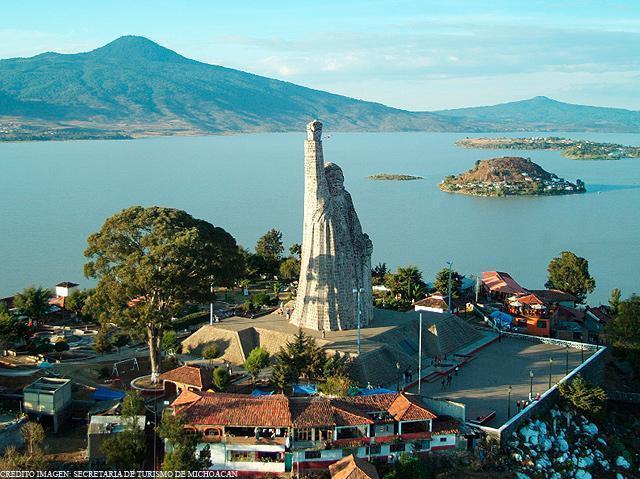
Patzcuaro, Michoacan, Mexico
Earlier this year, we headed to the airport to pick up some intrepid relatives arriving from bitterly cold Ottawa. They joined us in Zihua based solely on our description and photos included in our annual Christmas letter.
They had read about the dangers of travel in Mexico, but on our recommendation, they discovered it only takes a little forethought and common sense to stay perfectly safe in most Mexican towns and resorts.

We frequently read about all the homicides in the Lower Mainland Vancouver, but we still choose to live here. Given the news stories, Vancouverites should be scared to go out at night, but common sense tells us we are safe. It’s the same in many places in Mexico.

Original Story:
Common sense prevails

Wednesday, November 5, 2014

Confessions of a Spice-Challenged Visitor to Mexico

 Bob Schulman
Travel editor, WatchBoom.com
huffingtonpost.com


First, let's get this straight: I really like spices. The trouble is, they don't like me. Anything with even a tiny chili in it gives me an instant heartburn. So when I'm in Mexico, enchiladas are out. So are quesadillas. Ditto for huevos rancheros. I can't even be in the same room with chipotles a la poblana.
Where can a spice-challenged traveler chow down south of the border?

As a travel writer, I've been there lots of times. Over the years I've learned to look for big hotels that cater to families -- because their restaurants tend to offer simple fare for kids. Like hamburgers, hot dogs and pepito (steak) sandwiches.
2014-11-04-1570.jpg
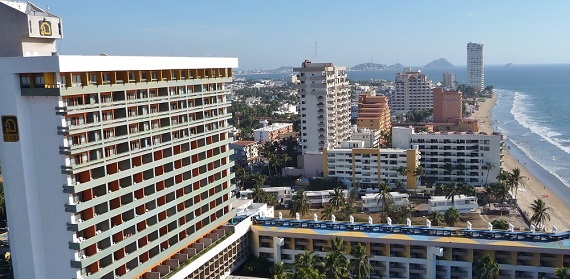
Many of Mazatlan's big hotels are in the city's 'Golden Zone.'
What about side dishes? I order papas fritas (french fried potatoes) to go with my burgers. Can't go wrong there. Well, usually.
At night, I make a bee line to restaurants of the ilk of Senor Frog's and Carlos'n Charlie's (among a bunch of fun restaurant brands in the Grupo Anderson's chain). Such places serve up stateside-type burgers and fried chicken and even fairly tame barbecue dishes, like Carlos' "Moo-Peep-Oink" (barbecued steak, chicken and ribs).Ay caramba! That one scores a big 10 on my non-spicy meter.
Munching around Mazatlan
I came across some great spots for the spice-impaired during a recent trip to western Mexico's beach resort at Mazatlan. One was a chili-less breakfast at El Shrimp Bucket in the La Siesta Hotel in the city's downtown Historic District. The restaurant has some history of its own, having opened in 1963 as the first location in what became the Grupo Anderson chain.
2014-11-04-2570.JPG
Spice-challenged tourists can opt for a tuna salad.
Another eatery offering my kind of dishes is a country and western version of Carlos'n Charlie's called La Casa Country. There, I chewed away on ribs to die for (but not from heartburn) while waiters dressed like cowboys pranced around doing line dances.
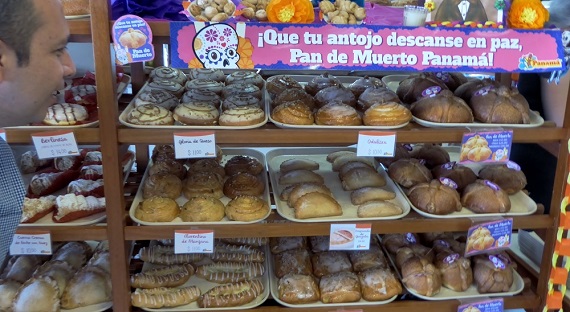
The next day, I walked away from the Panama Restaurant out in the Golden Zone (Mazatlan's hotel strip, about eight miles from the Historic District) without even a tinge of heart fire. Panama has three Applebee's-like restaurants around town along with nine bakeries, the latter with a menu full of sugar rolls, muffins, beignet fritters and other artery cloggers right out of the oven.
2014-11-04-3570.jpg
Mouth-watering gnoshes on the racks of the Panama bakery.
I should note that the places I've mentioned, like most of Mazatlan's other restaurants, typically have lots of hot Mexican stuff on their menus, too. Some also feature international gourmet dishes.

La Mazatleca, for instance, is happy to serve customers like myself a two-inch-thick filet topped with a mild Gorgonzola cheese sauce. Other customers might opt for hotties like Los Monos Biches (fried shrimp in garlic, chilis, onions and butter served with chili beans and cheese and topped with - quick, call the Fire Department -- chili-based adobo sauce).
2014-11-04-4570.JPG
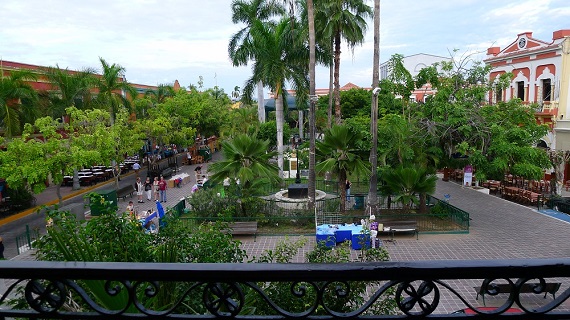
A number of restaurants are in the city's Historic District, near the Plazuela Machado.
El Presidio, another gourmet restaurant, came up with some yummy lamb chops and a baked potato for me. More adventurous diners at this elegant, old-world mansion went for an appetizer called Fideo Seco (spicy fried Mexican noodles with grilled garlic- and chili-based Zarandeado shrimp).
Freshly caught shrimp dishes show up on just about all of Mazatlan's menus. Arguably, the area's champion shrimp joint is a place called El Cuchupetas in the little city of Villa Union about a half-hour ride from Mazatlan. There, you can get anything from just breaded shrimp (one of my favorites) to the demoniac Shrimp Diabloamong some 50 shrimp dishes.
Back in Mazatlan, Pedro & Lola on the corner of the Plazuela Machado in the Historic District serves an awesome breaded shrimp plate (all the spicy things come on the side) with the hands-down best papas fritas in town.
In a real bind, on those rare days when I simply can't find anything spice-less in Mazatlan or anyplace else in Mexico, I can get by with a bowl or two of tortilla soup.
All photos by Bob Schulman